
The food industry operates on tight timelines, thin margins, and zero tolerance for error. Yet many businesses still rely on outdated systems that were never built for the realities of food supply chains.
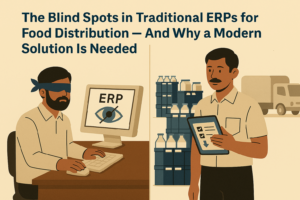
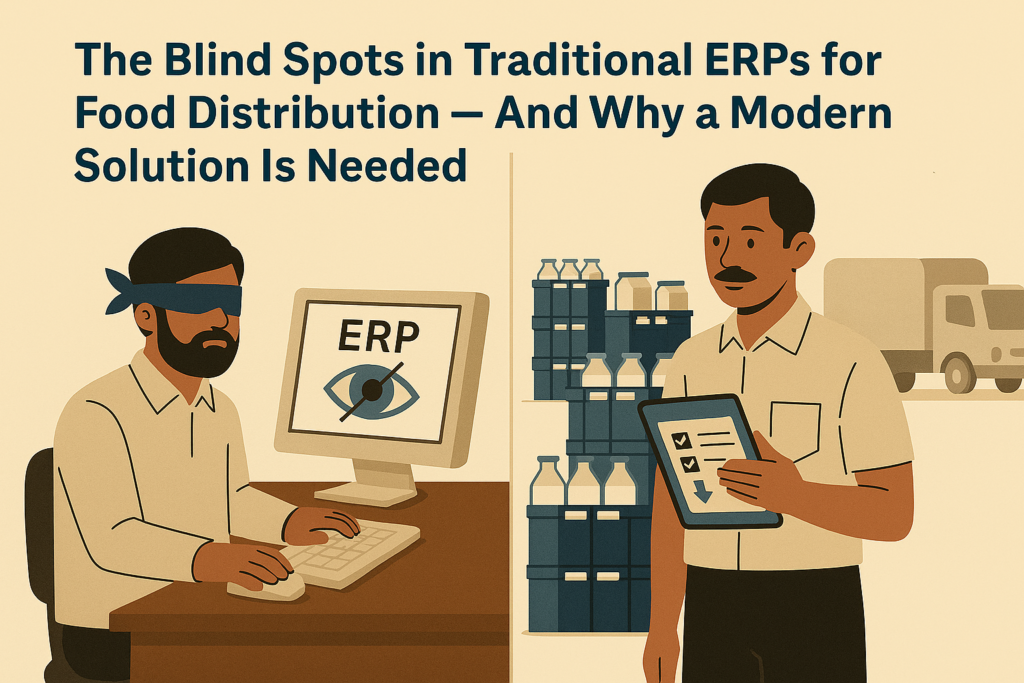
Traditional ERP systems may look reliable on paper, but in practice, they leave serious gaps—especially for retailers and distributors handling perishable goods. These blind spots directly impact efficiency, compliance, and profitability.
This is why the shift toward food distribution software built specifically for the industry is no longer a luxury—it’s a necessity.
Blind Spot #1: Inventory Management Without Real-Time Accuracy
Traditional ERPs often update inventory with delays, offering no real-time clarity. For food businesses, this leads to:
- Overstocking near-expiry products
- Unexpected stockouts
- Increased food waste
Modern food distribution software provides real-time visibility with batch-level details, expiry tracking, and FIFO/FEFO logic—helping distributors take action before losses occur.
Blind Spot #2: Weak Batch Tracking & Traceability
Food distributors must track products from source to shelf. However, many legacy ERPs treat food items like standard SKUs, making it difficult to manage:
- Batch and lot numbers
- Supplier traceability
- Product recalls
A modern ERP for food wholesalers ensures complete traceability, allowing businesses to quickly identify affected stock during recalls and meet regulatory requirements with confidence.
Blind Spot #3: Manual Processes That Slow Operations
Traditional ERP systems rely heavily on manual processes for:
- Order processing
- Returns and deductions
- Route and delivery planning
- Invoice reconciliation
Manual work introduces errors and delays across the supply chain management process. Modern
food supply chain software automates these workflows, improving speed, accuracy, and scalability.
Blind Spot #4: No Demand Forecasting for Perishable Goods
Most traditional ERPs focus on historical reporting, not predictive insights. But food businesses need systems that understand:
- Seasonal demand
- Shelf-life constraints
- Sales velocity
A modern ERP for food distribution combines demand forecasting with expiry data—helping distributors stock smarter, reduce waste, and maximize margins.
Blind Spot #5: Disconnected Supply Chain Partners
Food distribution involves multiple stakeholders—suppliers, warehouses, retailers, and logistics partners. Traditional ERPs struggle to integrate them seamlessly, resulting in:
- Data silos
- Delayed updates
- Manual coordination
Modern supply chain management software acts as a connected food distribution platform, enabling real-time collaboration across the entire ecosystem.
Blind Spot #6: Compliance Managed Outside the System
Food safety regulations are strict and ever-evolving. Traditional ERPs often handle compliance manually, increasing audit stress and risk.
Modern food compliance software, built into a purpose-driven ERP for food wholesalers, ensures traceability, documentation, and reporting are part of everyday operations—not last-minute fixes.
Why Traditional ERPs Can’t Keep Up With Modern Food Supply Chains
Many distributors try to extend old systems with custom add-ons. But patching legacy tools leads to:
- Higher maintenance costs
- Fragmented data
- Poor scalability
The reality is simple: traditional ERPs weren’t designed for perishable inventory, real-time supply chain management, or regulatory-heavy food distribution.
The Rise of Purpose-Built Food Distribution Software
This is why food businesses are adopting modern platforms like FoodBridge—solutions created specifically for food retailers and wholesalers.
A modern system delivers:
- Real-time food distribution software capabilities
- End-to-end supply chain management
- Automated batch and expiry tracking
- Smarter forecasting and insights
- Faster order-to-cash cycles
Instead of reacting to problems, businesses gain control, clarity, and confidence.
Final Thoughts: Visibility Drives Growth
In food distribution, what you can’t see can cost you dearly. Blind spots in traditional ERPs lead to waste, inefficiency, and missed opportunities.
By moving to a modern ERP for food wholesalers and food distribution software, businesses unlock better decision-making, stronger compliance, and scalable growth.
The future of food distribution belongs to companies that replace outdated systems with intelligent, connected solutions—built for how food supply chains actually work.