

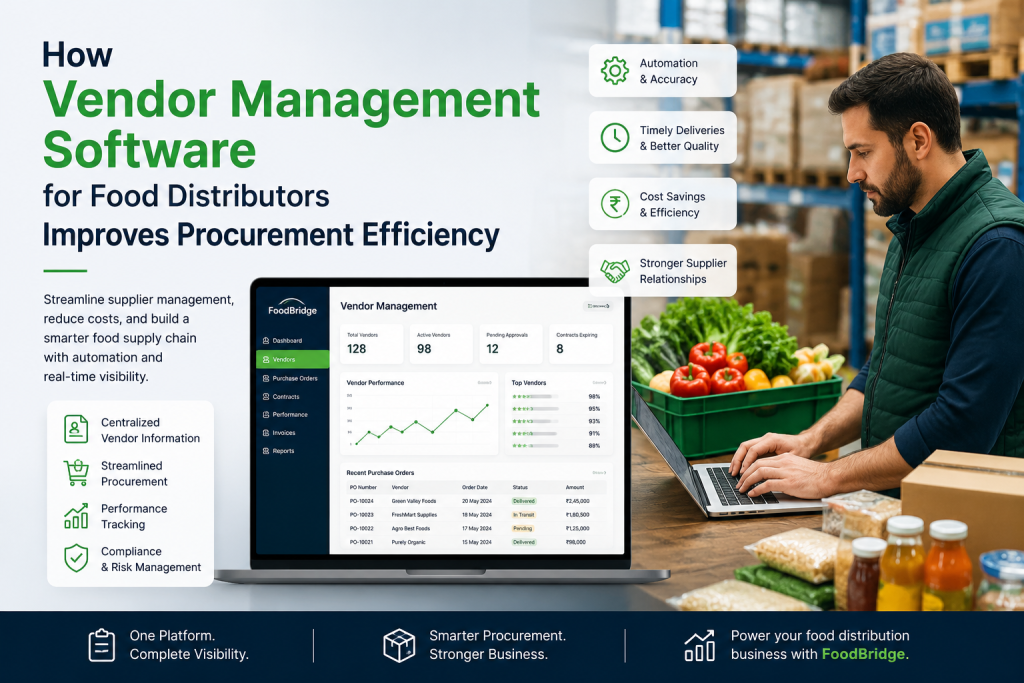
Vendor Management Software for Food Distributors: Streamlining Procurement from Start to Finish
Efficient procurement is the backbone of every successful food distribution business. Whether sourcing raw materials, packaged foods, or fresh produce, maintaining strong supplier relationships is essential for ensuring product availability, quality, and timely deliveries. As supply chains become increasingly complex, many businesses are adopting vendor management software for food distributors to streamline procurement, strengthen supplier collaboration, and improve operational efficiency. When combined with modern food supply chain software, businesses gain complete visibility across procurement, inventory, warehousing, and logistics, enabling them to respond quickly to changing market demands.
The Changing Landscape of Food Procurement
The food distribution industry operates in a fast-moving environment where even minor disruptions can have significant consequences. Delayed supplier deliveries, inconsistent product quality, inaccurate purchase orders, and fluctuating prices can quickly impact inventory levels and customer satisfaction.
Many food businesses still manage procurement using spreadsheets, emails, and paper-based documentation. While these methods may seem manageable initially, they become inefficient as supplier networks grow. Procurement teams often spend valuable time searching for supplier records, verifying documents, following up on deliveries, and resolving communication gaps.
Vendor management software eliminates these inefficiencies by centralizing supplier information and automating procurement workflows, allowing businesses to operate with greater speed and accuracy.
What Is Vendor Management Software?
Vendor management software is a digital solution designed to simplify every stage of supplier management. It enables businesses to maintain supplier records, automate purchase orders, monitor vendor performance, manage contracts, and ensure regulatory compliance from a single platform.
For food distributors, vendor management software becomes even more valuable when integrated with comprehensive food supply chain software, allowing procurement, warehouse management, inventory tracking, logistics, and order fulfillment to work together seamlessly. Instead of managing disconnected systems, businesses gain a unified view of their entire supply chain.
This integrated approach improves decision-making while reducing manual work across departments.
Why Vendor Management Is Critical for Food Distributors
Suppliers are much more than product providers—they are strategic partners who directly influence business performance. Reliable suppliers help businesses maintain inventory, fulfill customer orders on time, and consistently deliver quality products.
Poor supplier management, on the other hand, often results in delayed shipments, stock shortages, pricing inconsistencies, and customer complaints. Vendor management software provides procurement teams with complete visibility into supplier activities, making it easier to evaluate performance, identify potential risks, and build long-term partnerships with dependable vendors.
As businesses expand, this visibility becomes increasingly important for maintaining operational efficiency.
Centralized Supplier Information
One of the most significant advantages of vendor management software is the ability to store all supplier information in a centralized database.
Instead of maintaining separate spreadsheets for contact details, pricing agreements, contracts, certifications, and purchase histories, businesses can securely organize all vendor information within one platform.
This centralized repository enables procurement teams to quickly access supplier profiles, compare pricing, review historical purchases, and retrieve compliance documents whenever required. It also eliminates duplicate records and ensures every department works with accurate, up-to-date information.
Faster and More Efficient Vendor Onboarding
Introducing a new supplier typically involves collecting documentation, verifying licenses, reviewing contracts, and obtaining approvals from multiple departments. Manual onboarding often delays procurement and increases administrative work.
Vendor management software digitizes this process by allowing suppliers to submit documents electronically while procurement teams verify certifications and complete approval workflows within the system. This significantly reduces onboarding time while ensuring all compliance requirements are met before procurement begins.
As a result, businesses can respond more quickly to changing supplier requirements and market opportunities.
Automating Purchase Order Management
Purchase orders are at the heart of procurement operations. Manual purchase order processing often leads to duplicate entries, incorrect quantities, delayed approvals, and communication errors between buyers and suppliers.
Vendor management software automates purchase order creation, approval, and tracking. Procurement teams can generate standardized purchase orders, send them directly to suppliers, monitor order status, and maintain complete digital records throughout the procurement cycle.
Automation reduces paperwork, improves communication, and minimizes costly procurement mistakes that can affect inventory availability and customer service.
Tracking Supplier Performance with Real-Time Data
Every supplier contributes differently to business performance. Some consistently deliver quality products on schedule, while others may experience delays or quality issues.
Vendor management software enables businesses to continuously monitor supplier performance using measurable data. Procurement teams can review delivery timelines, product quality, order accuracy, responsiveness, pricing consistency, and contractual compliance through detailed dashboards and reports.
These insights support objective supplier evaluations and help businesses strengthen relationships with high-performing vendors while identifying opportunities for improvement with others.
Improving Procurement Transparency
Procurement decisions should be based on accurate information rather than assumptions. Vendor management software provides complete transparency into purchasing activities by maintaining detailed records of supplier quotations, pricing history, purchase orders, invoices, and delivery schedules.
This visibility enables procurement managers to negotiate better pricing, identify cost-saving opportunities, and prevent unauthorized pricing changes. Historical procurement data also supports long-term sourcing strategies that improve profitability while reducing unnecessary spending.
Strengthening Cross-Department Collaboration
Procurement is closely connected with warehouse operations, inventory management, finance, and quality assurance. When departments operate using disconnected systems, communication gaps often create unnecessary delays.
Vendor management software provides a centralized platform where authorized users can access supplier information, purchase orders, invoices, delivery schedules, and compliance documents in real time. This shared visibility improves coordination across departments, speeds up decision-making, and reduces manual follow-ups.
The result is a more connected organization capable of responding quickly to operational challenges.
Better Inventory Planning Through Reliable Procurement
Supplier performance directly affects inventory management. Delayed deliveries can lead to stock shortages, while inaccurate procurement planning often results in excess inventory and unnecessary storage costs.
Many of these issues are linked to broader supply chain challenges in food distribution, including fragmented communication, limited inventory visibility, and inefficient warehouse coordination. By combining vendor management with integrated supply chain processes, businesses can forecast inventory more accurately and maintain optimal stock levels.
Reliable procurement planning helps reduce waste, improve warehouse utilization, and ensure customers receive products without delays.
Supporting Food Safety and Regulatory Compliance
Food safety remains one of the highest priorities for every food distribution business. Suppliers must comply with industry regulations while maintaining valid certifications and quality standards.
Vendor management software helps businesses organize supplier certifications, audit reports, inspection records, quality documents, and regulatory licenses within one secure platform. Automated reminders notify procurement teams before certifications expire, reducing compliance risks and simplifying regulatory audits.
Businesses should also ensure that suppliers comply with guidelines issued by the Food Safety and Standards Authority of India (FSSAI), helping maintain food safety standards, regulatory compliance, and consumer trust throughout the supply chain.
Reducing Procurement Costs
The true cost of procurement extends beyond purchasing products. Manual paperwork, repeated data entry, delayed approvals, supplier disputes, and inefficient communication all increase operational expenses.
Vendor management software minimizes these hidden costs by automating repetitive administrative tasks and improving procurement accuracy. Teams spend less time correcting errors and more time building strategic supplier partnerships that contribute to business growth.
Over time, streamlined procurement processes generate measurable savings while improving overall operational performance.
Using Data to Make Smarter Procurement Decisions
Modern procurement depends on real-time information. Vendor management software provides analytics that help businesses evaluate supplier performance, monitor procurement spending, identify purchasing trends, and measure operational efficiency.
These insights allow procurement managers to make informed decisions based on measurable performance rather than assumptions. Businesses can proactively address supplier risks, improve sourcing strategies, and continuously optimize procurement operations.
This data-driven approach creates a more resilient procurement process that supports long-term business success.
Why FoodBridge Is the Ideal Solution
FoodBridge is purpose-built for the food distribution industry, bringing procurement, inventory management, warehouse operations, logistics, and supply chain visibility together in a single integrated platform. Its vendor management capabilities simplify supplier onboarding, automate procurement workflows, monitor vendor performance, and maintain compliance without relying on disconnected systems.
By digitizing supplier management and providing complete operational visibility, FoodBridge enables businesses to reduce manual effort, improve procurement efficiency, strengthen supplier relationships, and build a smarter, more agile food supply chain.
Conclusion
Supplier relationships are one of the most valuable assets in the food distribution industry. As procurement operations become increasingly complex, relying on manual processes limits efficiency and creates unnecessary risks. Implementing vendor management software for food distributors allows businesses to centralize supplier information, automate procurement, improve collaboration, strengthen compliance, and make faster, data-driven decisions.
When integrated with modern supply chain technology, vendor management becomes more than an administrative function—it becomes a strategic advantage that supports business growth, reduces operational costs, and improves customer satisfaction. For food distributors looking to modernize procurement and build a resilient supply chain, FoodBridge provides the technology needed to transform supplier management into a competitive advantage.
Frequently Asked Questions (FAQs)
1. What is vendor management software for food distributors?
Vendor management software for food distributors is a digital solution that helps businesses manage supplier information, purchase orders, contracts, compliance documents, performance tracking, and communication from a single platform. It simplifies procurement processes and improves collaboration with vendors.
2. How does vendor management software improve food procurement efficiency?
Vendor management software automates repetitive procurement tasks, centralizes supplier data, streamlines purchase order management, tracks vendor performance, and improves communication. This reduces delays, minimizes errors, and helps businesses make faster, data-driven purchasing decisions.
3. Why is vendor performance tracking important in the food industry?
Tracking vendor performance helps businesses evaluate suppliers based on delivery timelines, product quality, pricing consistency, and order accuracy. These insights allow procurement teams to work with reliable suppliers, reduce supply chain disruptions, and maintain high customer satisfaction.
4. Can vendor management software help with food safety compliance?
Yes. Vendor management software stores supplier certifications, licenses, audit records, and compliance documents in one place. It can also send reminders before certifications expire, helping businesses stay compliant with food safety regulations and industry standards.
5. Is vendor management software suitable for small and medium-sized food distributors?
Absolutely. Small and medium-sized food distributors can benefit from improved procurement efficiency, reduced paperwork, better supplier management, and lower operational costs. As the business grows, the software can scale to manage a larger supplier network.
6. How does FoodBridge simplify vendor management?
FoodBridge provides an integrated platform where businesses can manage vendors, automate procurement workflows, monitor supplier performance, track inventory, and gain real-time visibility across the food supply chain. This helps improve procurement efficiency while reducing manual effort and operational costs.

One Response