
In the food distribution business, loss rarely happens in one dramatic moment. It happens quietly.
It happens when a warehouse gate closes at night with unsold stock still inside. It happens when a sales team promises an order with confidence, only to discover later that the stock never really existed. It happens when dairy crates are written off because expiry crossed two days ago—and no one noticed in time.
In states like Punjab and Haryana, where food production feeds a large part of the country, these losses hurt more than the balance sheet. They hurt pride. They hurt relationships. They hurt trust built over years.
At the heart of most of these problems is one invisible issue: poor visibility.
When You Think You Have Stock, But You Don’t
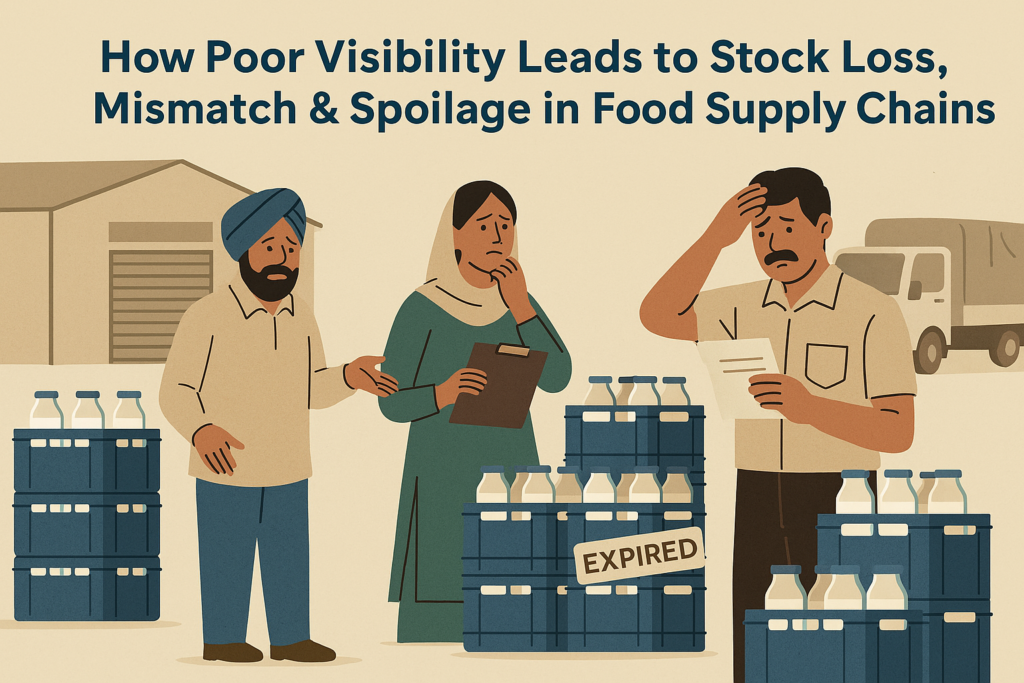
Ask any food distributor, and you’ll hear this story. The system shows stock available. The order is confirmed. Trucks are planned. But when the warehouse team goes to pick the goods, reality doesn’t match the screen.
Maybe the batch was already dispatched earlier. Maybe it was damaged. Maybe it expired and was kept aside. Whatever the reason, the result is the same—inventory mismatch.
This moment is emotionally draining. The distributor feels stuck between the customer and the warehouse. Apologies follow. Trust weakens. Internally, frustration rises. This mismatch happens because visibility is delayed. Stock updates are manual. Inward and outward movements are not captured instantly. Multiple records exist, but none reflect the real picture. A food supply chain software with real-time visibility removes this uncertainty. Everyone—from sales to warehouse—sees the same truth, at the same time.
Stock Loss That Feels Like It Came From Nowhere
Stock loss in food distribution often feels mysterious. There is no theft. There is no single mistake. Yet numbers don’t add up. The truth is, loss builds slowly when visibility is poor. Small damages go unrecorded. Shortages are adjusted later. Returns are not tracked properly. Over time, these “small issues” become big losses.
For distributors handling large volumes, this is mentally exhausting. You work hard, sales look healthy, but profits don’t reflect the effort. Inventory and distribution software brings accountability to every movement. When stock is tracked live—from receipt to dispatch—loss stops being invisible. Problems surface early, when they can still be fixed.
Expiry: The Most Painful Loss of All
Spoilage hurts differently.
When food expires in your warehouse, it feels personal. Someone grew it. Someone processed it. Someone transported it. And now it’s wasted—not because there was no demand, but because it wasn’t seen in time.
In many warehouses, expiry tracking is manual. Labels fade. Registers don’t get updated daily. During peak season, checks are skipped. By the time expiry is noticed, there are no options left.
This is one of the biggest supply chain problems in the food industry. With proper inventory management software for food business, expiry dates are tracked at batch level. FIFO and FEFO methods guide dispatch automatically. Alerts warn teams before damage happens.
This is how distributors learn not just how to manage food inventory, but how to protect value.
Cold Chain Losses That Destroy Confidence
Cold chain distribution challenges are unforgiving. A delay of a few hours. A temperature issue during transport. A missed handover. Entire batches of dairy or frozen goods can be lost.
What makes this worse is not just the loss—it’s the uncertainty. Where did it happen? Who is responsible? Could it have been prevented? Without visibility, cold chain failures become blame games. With food logistics management software, they become manageable risks. When movement timelines and storage conditions are visible, action can be taken early. Loss stops being accepted as “normal”.
When Manual Systems Break Under Pressure
Many Indian food distributors still depend on Excel, registers, and phone calls to track inventory. These systems work when volume is low. But as the business grows, they collapse. During festivals, harvest seasons, or sudden demand spikes, manual systems can’t keep up. One missed entry leads to confusion. Another leads to mismatch. Soon, teams are firefighting instead of managing.
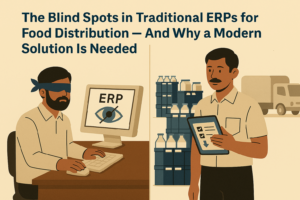
This is when people start asking about ERP systems. The confusion is understandable. Traditional ERP feels like the only option. But ERPs are built mainly for accounting and compliance, not for fast-moving food operations.
What distributors actually need is supply chain automation software—tools that track movement, expiry, orders, and warehouses in real time, without slowing teams down.
Sales and Warehouse Living in Different Worlds
In many businesses, sales and warehouse teams operate like separate worlds. Sales sees demand. Warehouse sees physical stock. Without shared visibility, conflict becomes routine. Sales feels blocked. Warehouse feels blamed. Management feels stuck in between. This disconnect is one of the biggest reasons why distributors lose stock visibility.
A shared supply chain visibility platform aligns everyone. Orders, stock, and dispatch timelines are visible to all. Conversations become factual. Coordination improves. Stress reduces.
Suppliers, Procurement, and Guesswork
Poor visibility doesn’t stop at the warehouse. It extends to suppliers. Without vendor management software for food distributors, supplier performance is judged by memory. Who delivers on time? Who causes delays? Who compromises quality? No one really knows.
This makes procurement planning risky—especially during harvest season procurement planning in Punjab and Haryana.
With proper supplier management software for distributors, performance becomes measurable. Procurement decisions become confident. Dependency risks reduce.
GST, Credit, and Inventory Confusion
In India, inventory visibility is directly linked to GST and credit management. When stock movement is unclear, invoicing errors happen. Returns get complicated. GST reconciliation becomes stressful.
Credit sales add another layer. When dispatch, billing, and payment data don’t align, cash flow suffers.
A digital supply chain platform connects inventory, order management, and billing. This alignment reduces disputes, improves compliance, and protects working capital.
Why Poor Visibility Is Not a Small Problem Anymore
In today’s food distribution landscape, poor visibility doesn’t just cause inconvenience—it threatens survival.
Margins are thin. Competition is high. Customers expect accuracy. Retailers don’t tolerate excuses. Distributors who rely on delayed data will continue to face stock loss, mismatch, and spoilage. Those who invest in real-time visibility will gain control and confidence.
Moving Beyond ERP to Real Visibility
ERP systems record what already happened. Food distribution needs systems that show what is happening now.
This is why many distributors are choosing supply chain software for food industry operations—tools built specifically for inventory movement, warehouse operations, supplier coordination, and order execution.
Platforms like FoodBridge are designed for Indian food distributors. FoodBridge is not an ERP. It is a supply chain management solution that provides real-time visibility across inventory, procurement, warehouses, suppliers, and orders.
It helps answer real questions distributors face every day:
- Why inventory mismatches happen
- How to reduce spoilage in food supply chain
- How to track stock in warehouse
- How to manage warehouse stock for distributors
- How food distributors track orders
Seeing Clearly Is the Real Advantage
Food distribution will always be challenging. But operating blindly should not be part of the job.
In Punjab, Haryana, and across India, distributors who digitize food supply chain operations are discovering something powerful—clarity. When you can see clearly, you lose less. You promise confidently. You plan better. You sleep better.
And in a business built on freshness and trust, visibility is not technology—it is peace of mind.